Once injuries have been checked and the scene has been documented, the next step after a car accident is deciding who needs to be notified.
In some situations, you should call 911 immediately.
In others, law enforcement may not need to respond at all.
But regardless of police involvement, your insurance company should always be notified if you were involved in a collision.
Understanding when to call—and why—can prevent confusion, delays, and problems later in the claims process.
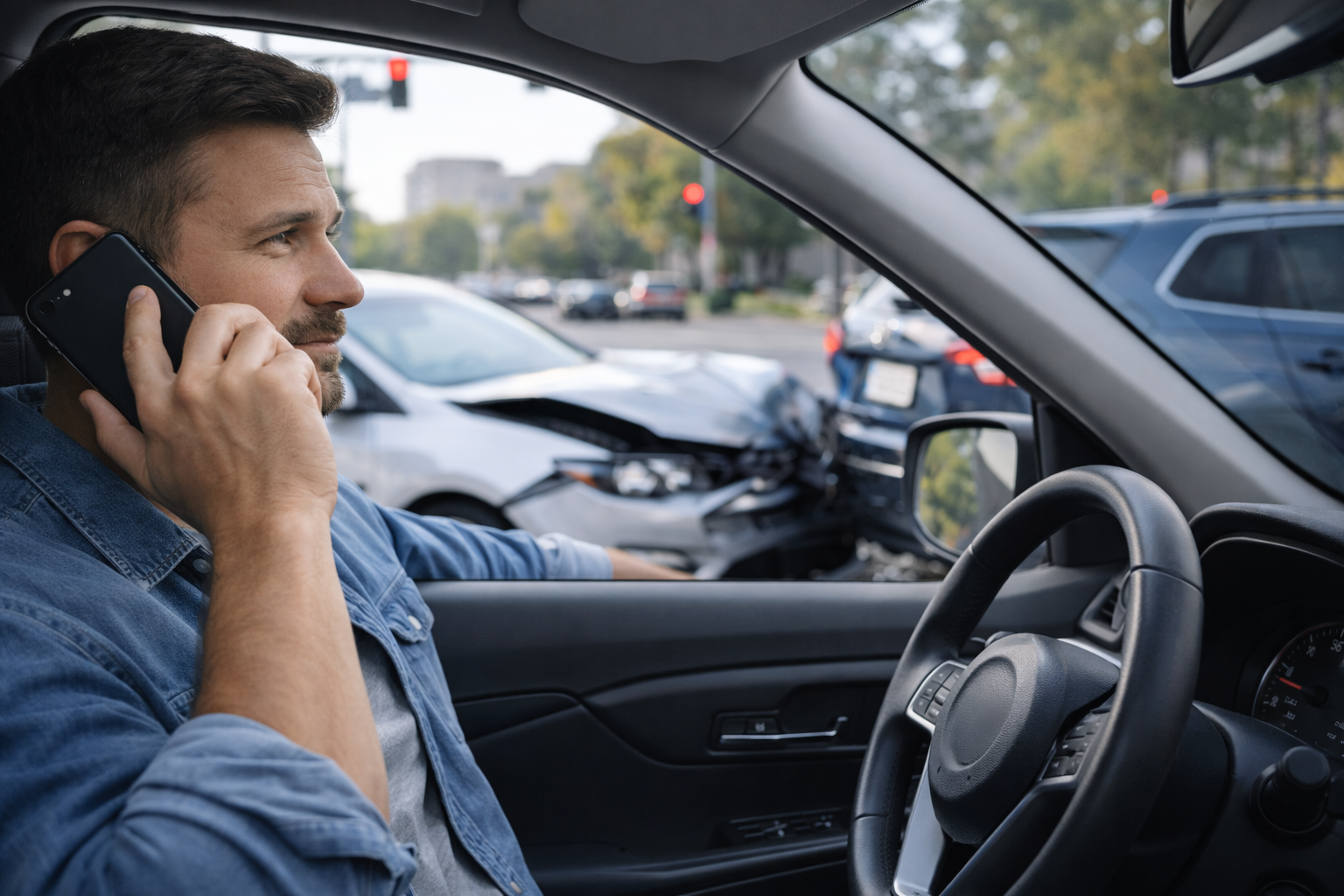
When You Should Call 911
From a dispatch perspective, certain situations always justify an emergency call.
Call 911 immediately if:
Anyone is injured
Someone may need medical attention
A vehicle cannot be moved safely
There is fuel leaking or a fire risk
A driver appears intoxicated
The crash is blocking traffic
The accident involves a pedestrian or cyclist
Even if injuries appear minor, it’s better to let emergency responders assess the situation.
Dispatchers are trained to ask questions that help determine what resources are needed—whether that’s police, fire, or medical assistance.

Situations Where Police May Not Respond
Not every accident requires law enforcement to come to the scene.
In many cities, especially during busy hours, police may not respond to minor property damage accidents where:
No one is injured
Vehicles are drivable
Both drivers have exchanged information
Dispatch centers often prioritize calls involving injuries, hazards, or public safety concerns.
If officers do not respond, drivers may be instructed to:
Move vehicles to a safe location
Exchange information
File a report later if required by state law
This doesn’t mean the accident isn’t important—it simply means emergency resources are being directed where they’re needed most.
When to Contact Your Insurance Company
Even if police are not involved, you should still notify your insurance company as soon as possible.
Insurance companies rely on early reports to:
Open a claim
Begin the liability investigation
Gather statements from drivers
Document vehicle damage
Identify potential injuries
Reporting the accident promptly helps preserve accurate information while the event is still fresh.
Delaying a claim can sometimes complicate the investigation later.

What Happens When You Report a Crash
From the insurance side, the first call begins a process that most drivers never see behind the curtain.
Once a claim is reported, an adjuster will typically begin by gathering basic information:
When and where the accident occurred
Who was involved
Vehicle damage
Possible injuries
Police involvement
Statements from drivers, photos from the scene, and repair estimates all become part of the claim investigation.
The goal is to determine how the accident occurred and who may be responsible for damages.
A Note from the Dispatch Side
One thing dispatchers often see is drivers hesitating to call because they think their accident is “too small.”
If someone might be injured or the situation feels unsafe, calling 911 is always the right choice.
Dispatchers would much rather assess a minor crash than have someone avoid calling during a situation where help was truly needed.
At the same time, if the accident is minor and everyone is safe, staying calm, exchanging information, and reporting the incident to insurance may be all that’s necessary.
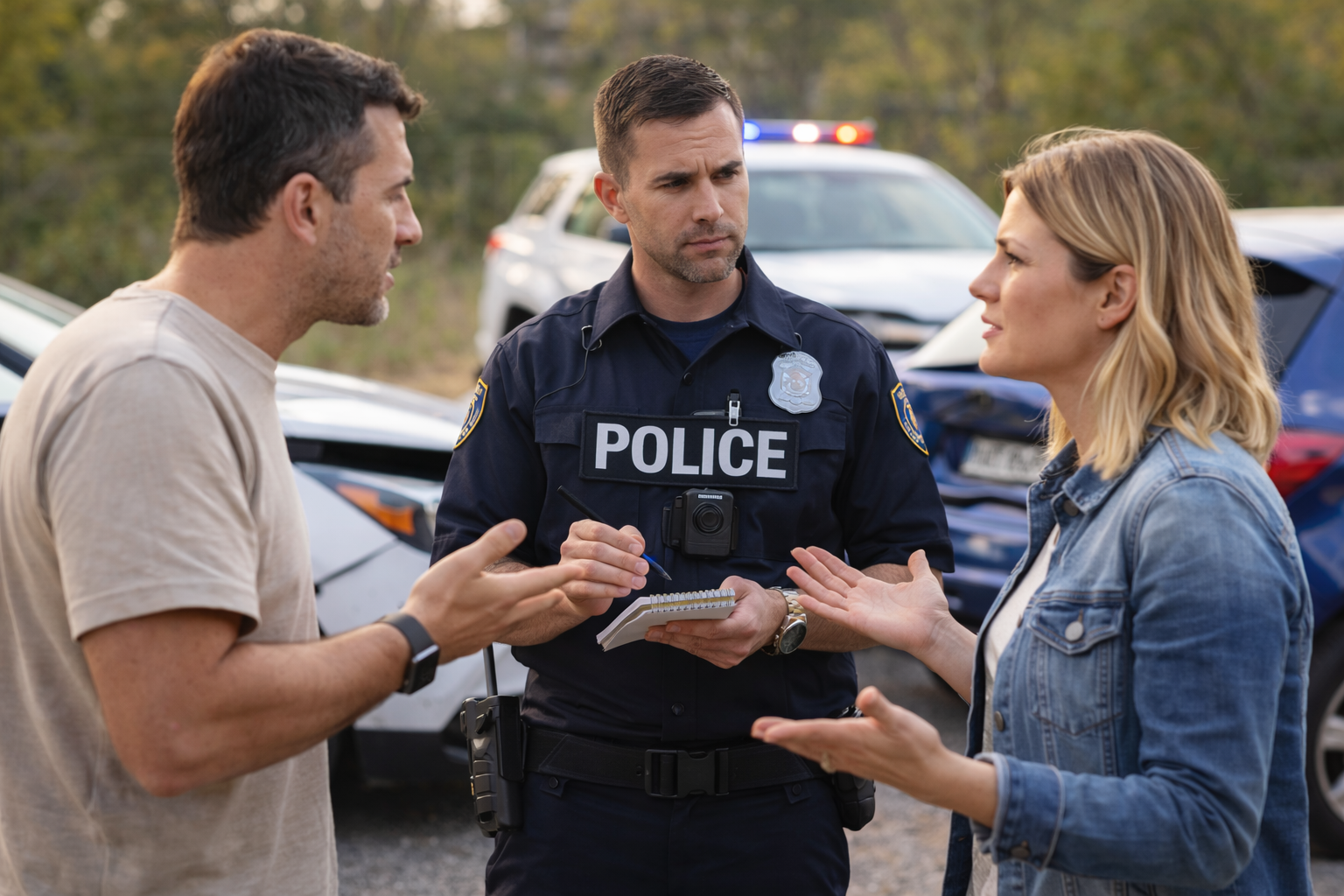
Oregon Drivers: You May Also Need to File a DMV Accident Report
In Oregon, reporting an accident doesn’t always end with calling police or notifying your insurance company.
State law also requires drivers to file an Oregon Traffic Accident and Insurance Report with the DMV if certain conditions are met.
You must report the crash to the Oregon DMV within 72 hours if the accident involved:
Injury or death
More than $2,500 in damage to any vehicle
More than $2,500 in property damage (including fences, buildings, etc.)
If any vehicle needed to be towed
Damage to a vehicle whose owner cannot be located
This report is required even if police respond to the accident.
Many drivers assume the officer files the necessary paperwork on their behalf, but that’s not always the case. In Oregon, the responsibility to report often still falls on the driver.
Failure to file the required DMV accident report can result in license suspension.
How to File the Oregon Accident Report
Drivers can submit the report by completing the Oregon Traffic Accident and Insurance Report form (Link to file online), which is available through the Oregon DMV.
The form asks for details such as:
Driver information
Insurance information
Vehicle details
Accident location and time
A diagram of the crash
Because of this requirement, documenting the scene and gathering information at the time of the accident becomes even more important.
The notes, photos, and details you collect at the scene will make completing the DMV report much easier later.
After a car accident, knowing who to call can feel confusing.
The rule is simple:
If there are injuries or safety concerns, call 911.
If the accident is minor and everyone is safe, exchange information and report the incident to your insurance company.
Emergency responders and insurance investigators each play different roles in the process.
And understanding when to contact each one helps ensure the situation is handled safely, calmly, and correctly.