So last night after work, I was watching YouTube dash cam videos.
Don’t judge my hobbies.
If you’ve ever fallen into that algorithmic rabbit hole, you already know the pattern: near misses, spectacular failures, people arguing out their windows, and one phrase echoing through the comment sections like a curse:
“They came out of nowhere.”
And after a while, you start noticing something.
There’s a trend.
A recurring theme.
A shared moment of confusion that seems to stump far too many people.
Turning.
Specifically: people who start a turn, lose their nerve, and then bring their vehicle to a complete stop in places where stopping was never an option.
Let’s talk about it.
The Left Turn: Where Liability Goes to Die
Left turns are one of the most dangerous — and most misunderstood — maneuvers you can make on the road.
Here’s the rule that matters most:
Unless you have a green arrow, you are yielding.
Full stop.
A round green light does not give you the right of way to turn left. It gives you permission to enter the intersection after yielding to oncoming traffic.
That’s it. That’s the rule.
“But They Were Speeding!”
That argument comes up constantly, and it almost never helps.
Here’s why:
Speed is difficult to prove without an admission, video footage, or a citation.
Even if they were speeding — you still had the duty to yield.
You don’t get to guess someone’s speed, assume you’ll make it, and then blame them when physics disagrees.
Commit or Don’t Go
If you pull into the intersection to make a left turn, you are declaring that you have:
Judged the gap
Committed to the turn
Accepted responsibility for completing it
Stopping mid-turn because you suddenly feel unsure is not caution. It’s how you get hit.
If you aren’t confident you can clear the turn, stay stopped.
If you go — go.
Most left-turn accidents I see aren’t caused by aggression. They’re caused by hesitation at exactly the wrong moment.

The Right Turn: Your Eyes Are Betraying You
Right turns feel safer, which is exactly why people mess them up.
Here’s how a proper right turn should actually work.
Step One: Look forward
If there is a vehicle directly in front of you, that is your first priority.
If you are staring left to see if traffic is clear while the car in front of you is still stopped or creeping forward, this is how you roll into them.
I see this claim constantly.
Your eyes do not leave the vehicle in front of you until they have completed the turn.
Step Two: You’re first in line? Now check left
Once there is no one in front of you, check left for oncoming traffic.
Step Three: Check right again
Make sure you actually have room to enter the lane without rearending anyone.
Step Four: Check left — and keep checking left
This is the part people forget.
You don’t glance once and hope for the best. You monitor oncoming traffic through the entire turn.
If you say “I never saw them,” what you’re really saying is I stopped looking.
That’s not the defense you think it is.
Turn Into the Closest Lane. Every Time.
This one deserves its own altar.
When you turn, you turn into the lane closest to you.
Not the one you want.
Not the one you’ll “merge into real quick.”
Not the one that feels convenient.
The closest lane.
Failing to do this is a moving violation. If police see it, you can be cited. If an accident happens while you’re doing it, liability will not be on your side.
This isn’t about being polite. It’s about being predictable.
“They Came Out of Nowhere” Is a Liability Red Flag
From an adjuster’s perspective, this phrase sets off alarms.
It usually means:
You stopped looking
You hesitated mid-turn
You misjudged distance or speed
You assumed instead of yielding
Traffic doesn’t teleport. If a vehicle was there to hit you, it was there to be seen.
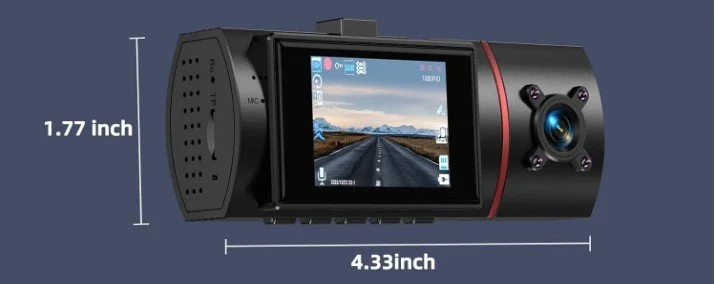
Please. Get a Dash Camera.
Even if you think it “violates your privacy.”
You’re on a public roadway. There is no expectation of privacy. A dash cam records exactly what your eyes could already see — except it remembers better than you do.
Dash cameras:
Capture hesitation, not just impact
Show whether a turn was committed or abandoned
End arguments before they begin
Resolve claims faster than memory ever could
You don’t need an expensive one. You just need one that turns on when the car does.
Turning isn’t complicated — but it does require decisiveness.
If you’re unsure, don’t go.
If you go, commit.
Yield when the law says yield.
Turn into the correct lane.
And keep your eyes where the danger actually is.
Most turn-related accidents aren’t caused by recklessness.
They’re caused by hesitation in places where hesitation is deadly.
Drive like you mean it.