A car accident happens in seconds, but the decisions you make in the first few minutes matter more than anything that follows.
Many drivers instinctively reach for their phones, step out to inspect vehicle damage, or begin discussing fault with the other driver. But the very first step after any accident—no matter how minor it appears—is simple and critical:
Check for injuries.
Before police reports, before insurance claims, before photos of bent fenders—make sure everyone involved is safe.
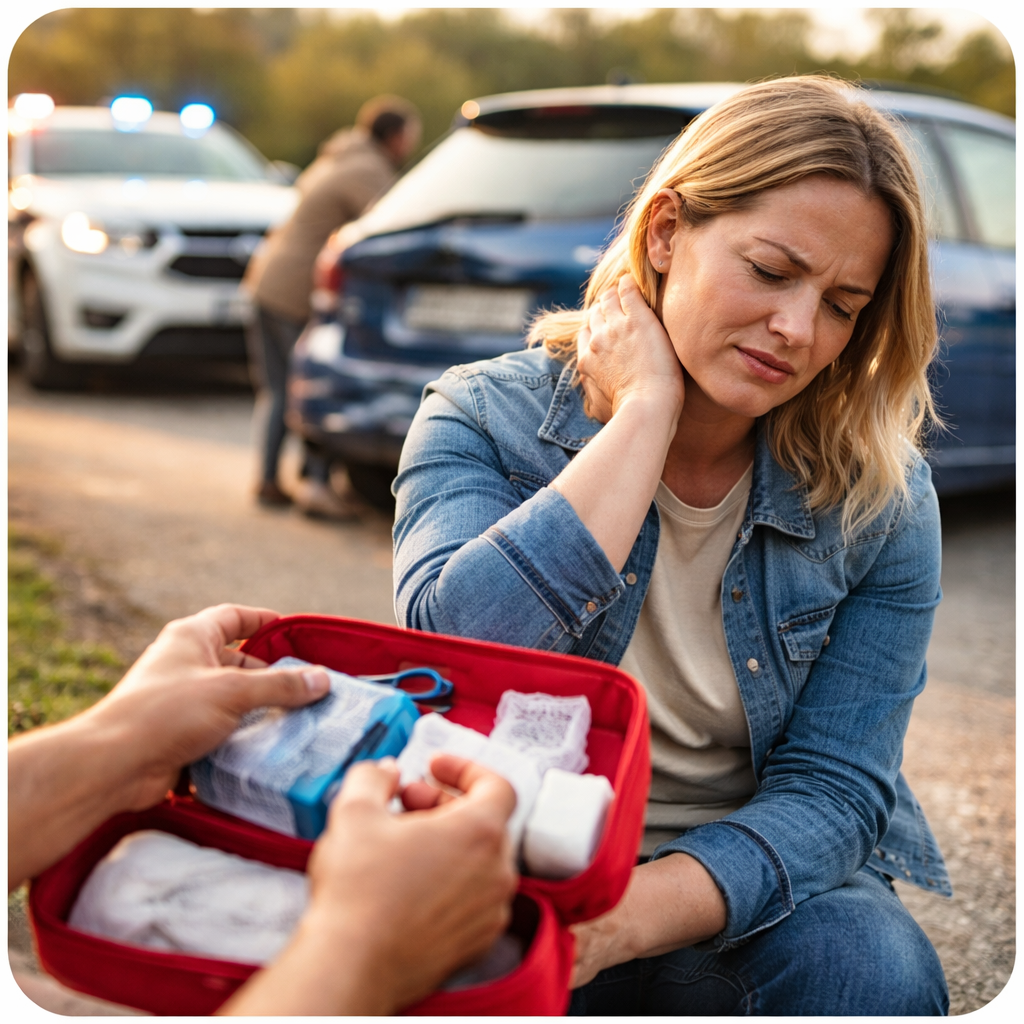
Why Checking for Injuries Comes First
The immediate aftermath of an accident is often confusing. Your body floods with adrenaline, which can mask pain and make injuries harder to recognize.
Some injuries—especially whiplash, concussions, and internal trauma—may not show symptoms right away.
That means someone may say they’re fine when they’re not.
Checking for injuries ensures:
Anyone hurt receives help quickly
Emergency responders can be called if needed
Injuries are documented early
The situation stays calm and controlled
It also demonstrates that you acted responsibly at the scene.
In many cases, how drivers behave in the first few minutes becomes important later during insurance investigations.
Step 1: Check Yourself First
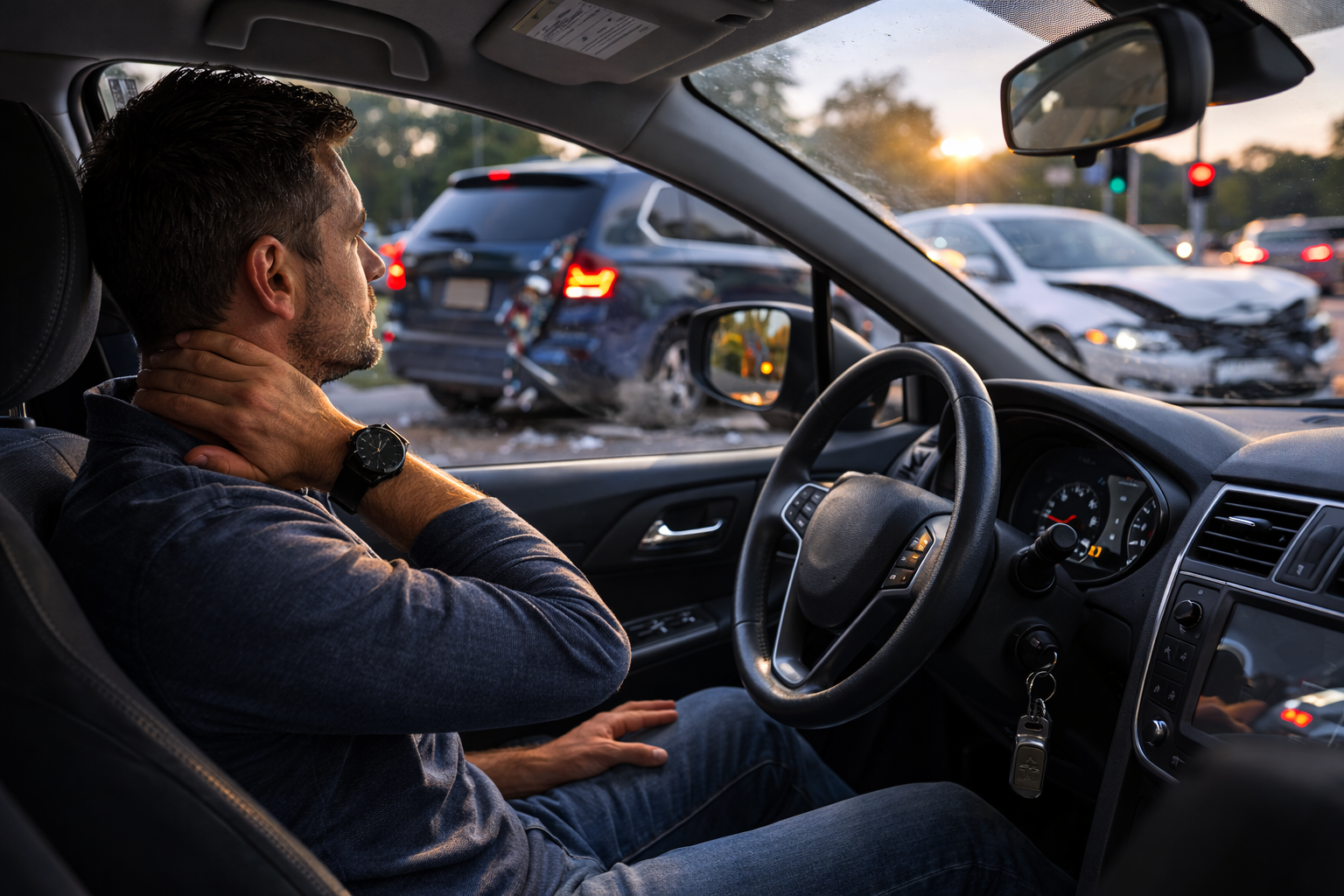
Before stepping out of your vehicle, take a moment to assess your own condition.
Ask yourself:
Do I feel dizzy or disoriented?
Is there sharp pain anywhere in my body?
Am I bleeding?
Can I move my arms and legs normally?
Adrenaline can hide injuries, so move slowly.
If you suspect a head, neck, or spinal injury, try not to move unnecessarily and call for help immediately.
Step 2: Check Passengers in Your Vehicle
If others were riding with you, check on them next.
Ask simple questions:
Are you hurt anywhere?
Can you move okay?
Do you feel dizzy or nauseous?
Look for signs of injury such as:
Bleeding
Difficulty moving
Confusion or disorientation
Complaints of neck or back pain
If someone appears seriously injured, call 911 immediately and avoid moving them unless necessary for safety.
Step 3: Check on the Other Driver and Occupants
Once it’s safe to exit your vehicle, check on the other people involved in the crash.
Approach calmly and ask if anyone is hurt.
Even if the accident seems minor, injuries can still occur.
If someone reports pain or appears injured, emergency services should be contacted right away.
Step 4: Call for Medical Help if Needed
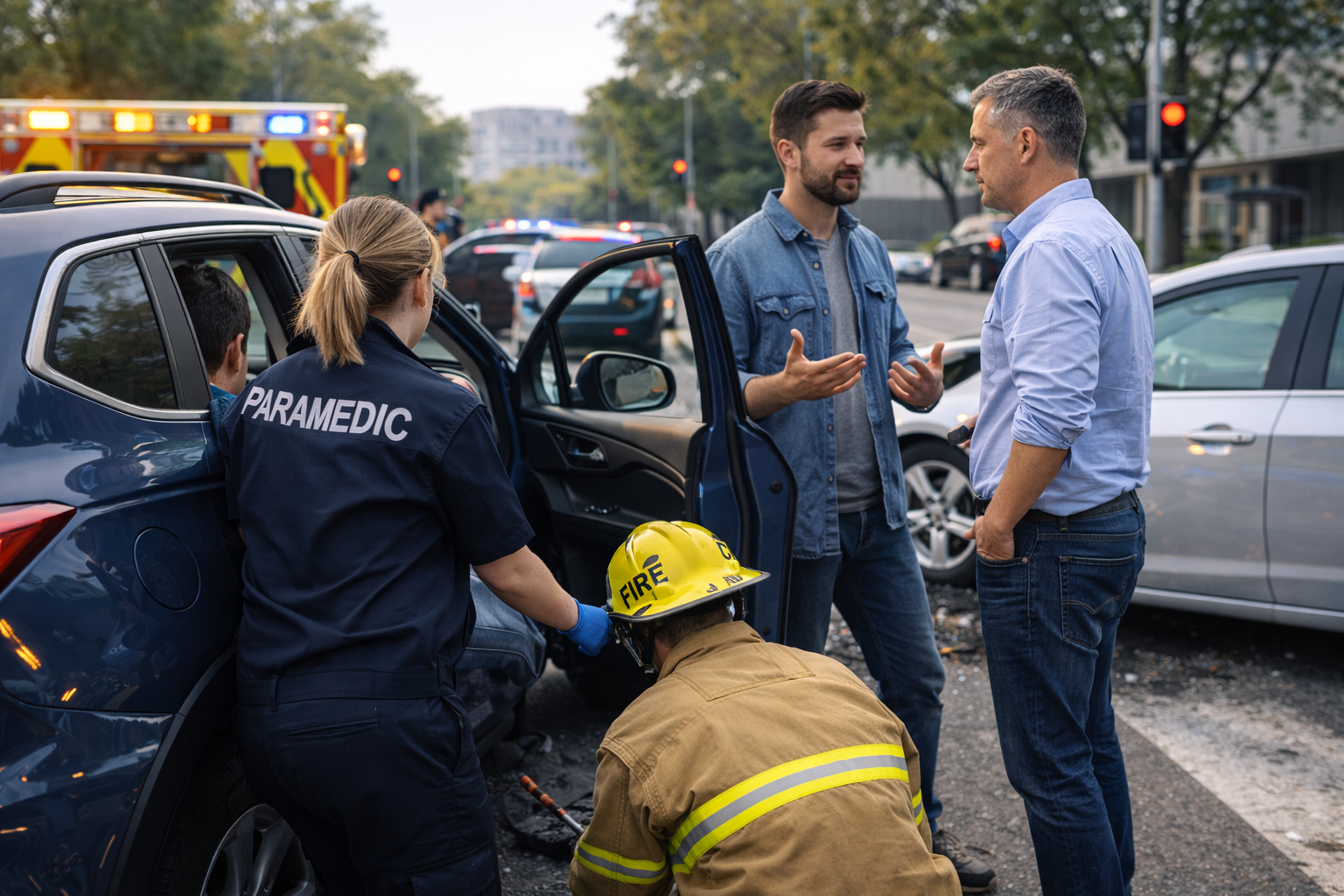
If anyone is injured—even moderately—it’s important to contact emergency services.
Situations that should always prompt a 911 call include:
Loss of consciousness
Severe pain
Head injuries
Neck or back injuries
Heavy bleeding
Difficulty breathing
Emergency responders can assess injuries and determine whether medical treatment is necessary.
Even when injuries appear minor, having medical professionals evaluate the situation can be important for both health and documentation.
Why This Step Matters for Insurance Claims
From an insurance perspective, checking for injuries also plays a role in how a claim develops.
Early recognition of injuries allows:
Prompt medical treatment
Accurate documentation of symptoms
Proper evaluation of bodily injury claims
Delays in reporting injuries can sometimes complicate the claims process.
The most important thing, however, remains simple:
Make sure everyone is safe first.
Everything else can wait.
A Small Moment of Kindness Matters More Than You Think
There’s another reason checking for injuries matters—one that rarely appears in accident guides.
It’s about basic human decency.
Car accidents are frightening. Even minor ones can leave people shaken, embarrassed, or overwhelmed. In that moment, emotions run high and the situation can feel chaotic.
Taking a few seconds to ask “Are you okay?” can change the entire tone of what follows.
From an insurance perspective, this matters more than people realize.
Many claims adjusters hear the same complaint again and again during investigations:
“They didn’t even check if I was okay.”
Even when the accident itself was minor, that small moment of perceived indifference can shape how the entire claim unfolds. People remember how they were treated in those first few minutes.
A simple check-in doesn’t admit fault.
It doesn’t affect liability.
But it does remind everyone involved that, at the end of the day, we’re all just human beings dealing with a stressful situation.
You don’t know what the other driver was dealing with before the accident.
They don’t know what you were dealing with either.
A little patience and kindness in those first moments can prevent tension from escalating—and it can make an already difficult situation just a little easier for everyone involved.
After an accident, it’s natural to think about damage, insurance, and what happens next.
But the first responsibility at any crash scene is older than insurance companies and traffic laws.
Check the people.
Make sure everyone is safe.
Only after that should the rest of the process begin—documenting the scene, reporting the crash, and starting the insurance claim.
Because in the quiet moments after metal collides, the most important question isn’t about vehicles.
It’s simply:
“Is everyone okay?”